"Lovely in Limbs"
...Live Drawing and the Dignity of the Human Person


“And the man and his wife were both naked, and were not ashamed.”
– Genesis 2:25
I stepped into the entryway and felt almost as though I had stepped into a Church. A beam of light shone from a curtained off section of the room, casting an artist in a spotlight. He sat with an easel in front of him, holding a graphite pencil delicately in one hand, brushing the paper in front of him with smooth gentle strokes. Every few seconds he glanced up into the lighted room, then added another stroke to his creation.
He noticed me, loitering in the entryway nervously clutching my sketchbook, and smiled. In his gentle Irish brogue, the artist gave me a set of directions, and I finally stepped around the curtain.
Within the lighted space was a circle of artists, quietly sketching. At the center of the circle was a young woman posed on a small black platform.
She was nude.
It was the first time I had attended a live drawing session, and I was terrified.
Background
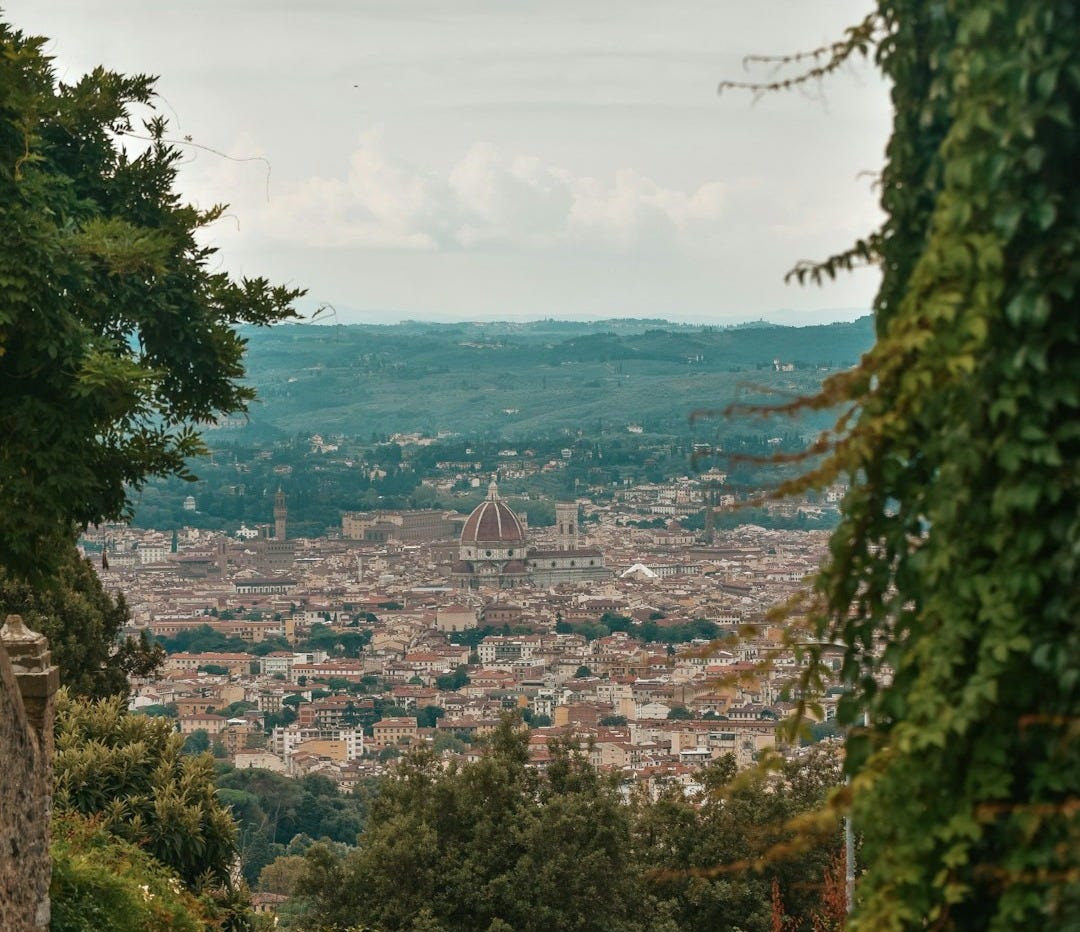
The fact that I was there at all was a gift from God. The dimly lit studio I walked into was actually in Florence, Italy on the banks of the Arno river. I was in the ancient city visiting a friend of mine who was studying sacred art and had been invited by another artist to attend this live drawing session.
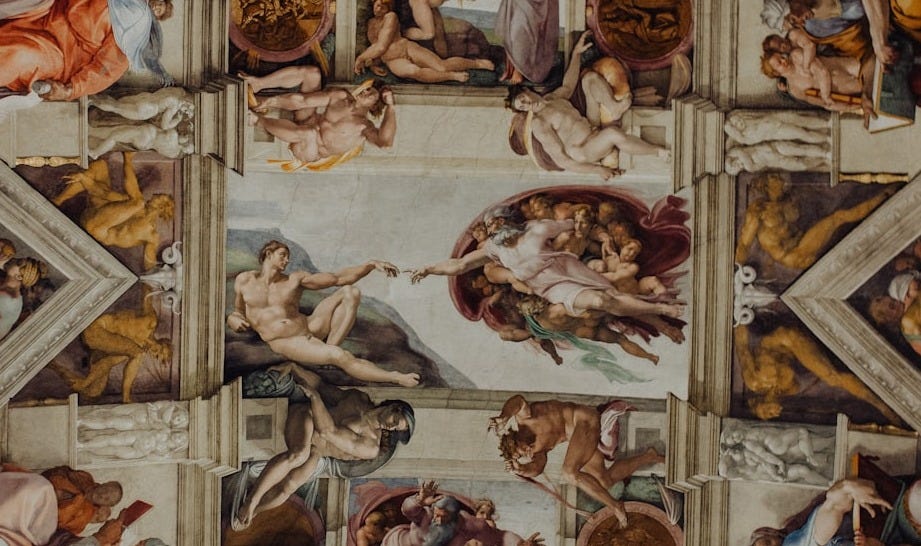
Drawing figures in the nude has been a tradition of artists since time immemorial. From Grecian statues, to the Sistine chapel, to “the Thinker” by Degas, the halls of most museums are full of naked bodies and detailed musculature. You cannot be a serious artist without spending a significant amount of time examining the human body. The best way to practice portraying humanity is to have it in front of you to draw.
The session I was attending was nothing new to artists in general, though it was new to me. Why then was I so nervous?
Unfortunately, museums are no longer the only place to see a naked body anymore. Our culture has become overwhelmed by a distressing disrespect and disregard of the sacredness of the human body. Most people by the time they are thirteen have been exposed to pornography. Immodesty is prevalent, and a naked body is usually posed to seduce rather than inspire.
I was nervous. How would I react to the sight of a naked body? How would she be posed? Would it be a temptation for me or degrading for the person? I have done my best to foster respect for the dignity of the human person, to keep my eyes shielded from immodesty and vulgar nakedness… was this session going against everything I have been working towards?

Beauty Revealed
As I began drawing however, the experience was completely different. The woman before me was probably around 5’3”. She was a bit overweight, had multiple tattoos, had her septum pierced, and wore her hair in two thin braids. If I had passed her on the street, I would not have thought much of her looks. Perhaps I would have even judged her for her weight, or her curious choice in jewelry.
Yet as I began sketching—she became more and more beautiful in my eyes.
I began first with the general lines of a human form, horizontal lines for the angles of her shoulders and waist, vertical swoops for the curve of her spine. These are outlines we all share, and there was something comforting about capturing the rough skeleton that lives within us all. The model had posed herself in a “contrapasso” position, and the shape that creates on the human body is striking: a lift to one shoulder and the opposite hip make the body seem relaxed.
Then I focused on the details, the way her arms touched her sides, the shadows cast by her calves. These too we all share, but the curves, proportions, posing were all uniquely her. The more I drew, focusing on proportion, shadows, and lines, the more I began to see the beauty before me. Even her cellulite, something traditionally scorned as unsightly for women, cast interesting shadows and I found myself including it in my sketch along with the rest of her body.
Every fifteen minutes or so she would change position, and we artists would start a fresh sketch. Every new pose revealed a novel and intense beauty to me as the artist. A new angle, a new challenging line or foreshortening of her arm made me appreciate the complex beauty that was before me. I was learning, not just the shadow cast by a thigh upon a raised ankle, but about the beauty of the human form and the one who made it.
The Great Artist and the God-man
God has created human beings and they are beautiful, reflecting the order and the proportion he has in Himself. Not only that, but the great dignity of the human body, bestowed on it first by its creation by God, is only augmented and restored by the great mystery of the Incarnation.
One of the artists I met in Florence made the comment that it is only because God became man that the practice of sacred art exists. We can paint God–Jesus Christ–who is both God and man. What humility God has, and what joy he must take, in seeing us artists try again and again to capture him in brushes and ink. Like a parent presented with a truly grotesque crayon portrait, he must get some deep chuckles from our attempts.
All have sinned and fallen short of the glory of God. Nakedness is not something to be sought or promoted, and even our depictions of the crucifixion are veiled out of respect for the human body of our God. Nudity however, in the artistic study of the human person can glorify God.
In a way, the respectful study and portrayal of the human person, in all its parts, is redeemed and “baptized” because of the Incarnation. God became man, and so the human body is bestowed with great dignity. It is not the body which is shameful, but our own disrespect and use of the body. Therefore, to see the body with dignity, to spend time as an artist in loving and respectful portrayal of that body, is in right order, and a way of glorifying God through imitation of Him, the divine artist.
Two hours flew by quickly, and I left the studio with a new appreciation for the artistry of God and the great dignity and beauty of the human person.
As I walked along the Arno river, a line from a Gerard Manley Hopkins poem, came to me:
“....Christ plays in ten thousand places,
Lovely in limbs, and lovely in eyes not his
To the Father through the features of men’s faces.”
Christ was in the face of that model, and it is an encounter I will never forget.